Content

For inquiries or to sign up for the Interior Design Studies Minor, please reach out to the College of Architecture Advising Staff."
Interior Design Studies Minor (17 credits)
Interior designers activate the space between architecture and people. This minor introduces the field of interior design to students outside the professional program through non-studio-based coursework. Students gain foundational knowledge of how designers shape interior environments to support human well-being, cultural expression, safety, and address societal issues.
This minor is not accredited and does not provide credentials to practice interior design. Professional credentials are obtained only through the CIDA accredited Bachelor of Science and Design – Interior Design degree. The minor is designed to build interdisciplinary literacy and collaboration.
Why should I minor in Interior Design Studies?
- Learn how interior environments shape human experience.
Explore how designers intentionally shape interior spaces to support health, safety, well-being, beauty, meaning, experience, and sustainability. - Gain design literacy without pursuing a professional design degree.
The minor introduces foundational design knowledge, architectural and interior history, with interior-focused systems through a student’s selection of elective courses. The minor is ideal for students who want to understand how designed environments work and develop design literacy without committing to a professional studio curriculum. - Support career pathways across multiple fields and enhance interdisciplinary collaboration skills.
The minor complements majors in architecture, business and marketing, health and wellness, hospitality, psychology, journalism, emerging media, theatre, fine arts, environmental studies, and related disciplines where spatial experience and human behavior matter. Understanding how space influences experience and performance is valuable across many professions. - Fulfill ACE requirements while adding depth to your degree.
Many courses may satisfy ACE requirements, offering broad interdisciplinary exposure while adding a meaningful concentration of coursework to your required academic plan.
Core Learning Focus
- Value, impact, and role of design in society.
- History and theory of architecture and interior design
- Beauty, atmosphere, and quality of experience in interior environments
- Sustainability and material system factors in interiors
- Human factors in interiors
Student Work
HOTEL PER LA - LOS ANGELES, CALIFORNIA
IDES 445 History of Interiors
by Jaqui Seerman
GOLD & BLUE ITALIANATE CEILING
Coffered decorative ceiling patterns with gold detailing used as focal point that translates to rest of the interior.
DORIC COLUMNS
Originating from Greek architecture, they’re used here for decoration rather than structural support & enhanced the grandness of the space.

HOTEL PER LA - LOS ANGELES, CALIFORNIA
IDES 445 History of Interiors
by Jaqui Seerman
Description:
Decorative, grandness, neoclassical, doric columns, interior, refresh, modern, blue, seating area
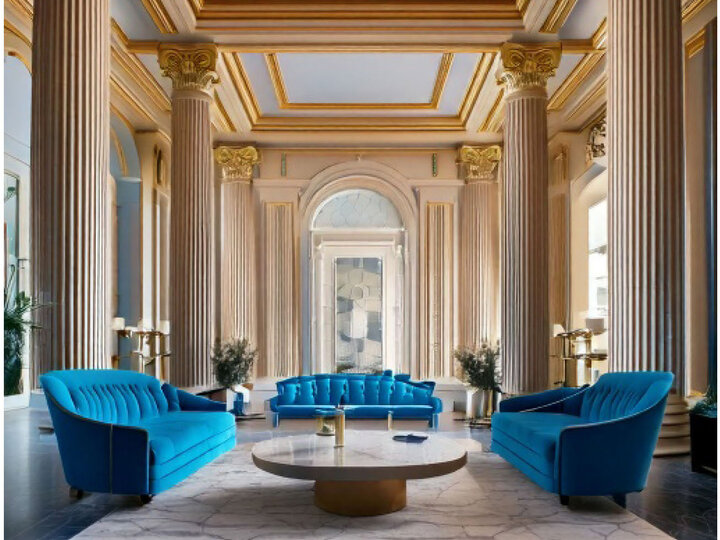
HOTEL PER LA - LOS ANGELES, CALIFORNIA
IDES 445 History of Interiors
by Jaqui Seerman
Description: Decorative, coffered, neoclassical, interior, refresh, modern, gold, Los Angeles, focal point

Electives (9 credits):
Students should select from a list of courses that align best with their interests and curiosity as it relates to interior built environments. Courses should be selected based on interest areas and content:
IDES 200 Program, Standards, & Codes (Spring)
IDES 300 Interior Design Materials (Fall)
IDES 334 Lighting & Acoustics (Fall)
IDES 421 Environmental Graphic Design (Online/varies)
IDES 455 Environmental Behavior & Social Factors (Fall)
IDES 458 Changing Workplace (Online/varies)
IDES 484 Material Culture (Online/varies)
IDES 486 Evolving Issues (Fall)
IDES 487 Evidence Based Design (Online/varies)
IDES 491/ Selected Topics that are approved for ID Studies Minor.
Interior Design Materials Work
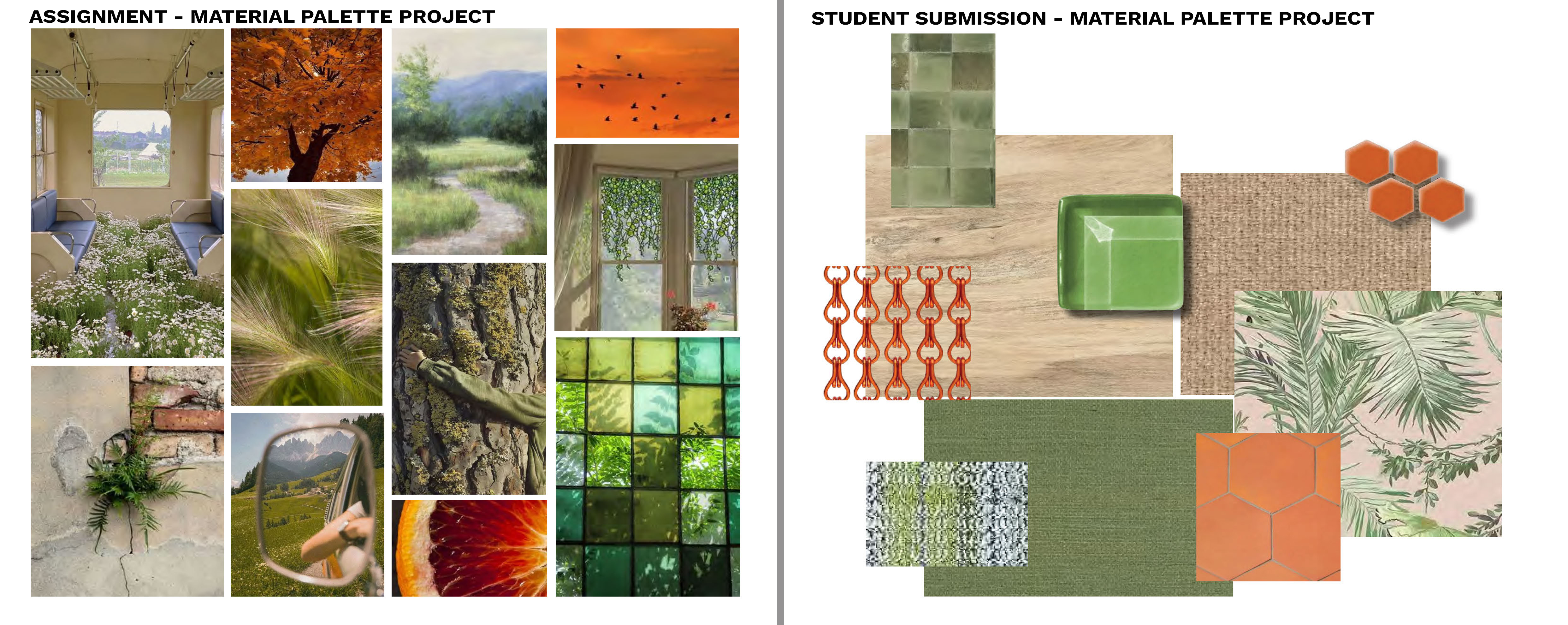
Assignment Description
Selected Concept: Care of Planet
Overall color scheme(s): Student decided to use a Complimentary color scheme. The green and blue colors are the most dominant with accents of orange sneaking in as well.
Approach: Student's approach to the material palette and the theme of Care of Planet was to invite the characteristics of nature inside. Reconnecting with the outdoors is shown to be a healing and rejuvinating experience for humans. And since people are inside for most of their lives, it’s important to integrate aspects of the outdoors with the indoors.
MATERIALS:
1. Copper Chain: Kriskadecor, 2. Interstyle 240- Neon Green: Interstyle Glass Tile, 3 Salter: Architex, 4. Fiorano Island Wood (Natural): Ceramic Technics, 5. Hexagon Terracotta Tile: Riad Tile, 6. Mandarin: Fireclay Tile, 7. Metamorphosis Vegetable: Coordonné, 8. Be Cool: FLOR, 9. Corsica: Specialty Tile, 10. Nazare: MDC Interior Solutions