
-
 Omaha Southside Terrace Redesign
 -
 Omaha Southside Terrace Redesign
 -
 Omaha Southside Terrace Redesign
 -
 Omaha Southside Terrace Redesign
 -
 Omaha Southside Terrace Redesign
 -
 Omaha Southside Terrace Redesign
 -
 Omaha Southside Terrace Redesign
 -
 Omaha Southside Terrace Redesign
Team:
Students: Elijah Edwards, Isaiah Langston, Antonio Stewart
Faculty: Salvador Lindquist
LARC 311 / Spring 2024
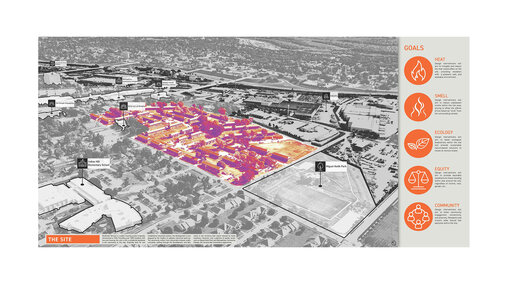
Southside Terrace is a public housing project originally constructed in 1940. Providing over 1000 residents with low-cost housing, the site is still a residential backbone in the community to this day.
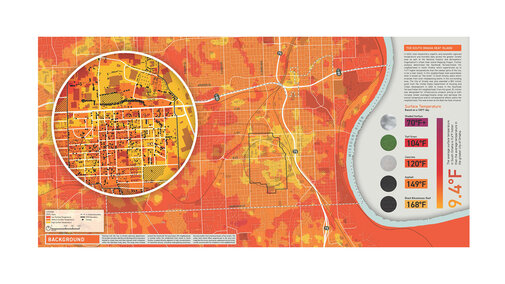
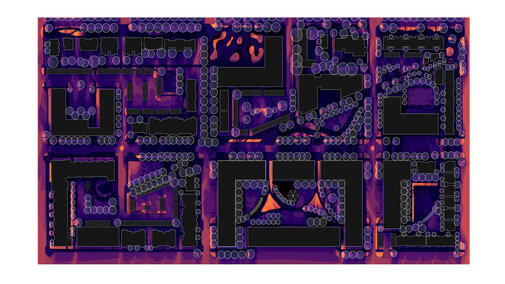
Currently, the Southside Terrace site contains numerous issues when looking through the lens of heat mitigation. Throughout the site, a lack of tree canopy is present, while the canopy that is provided is not equally distributed throughout.
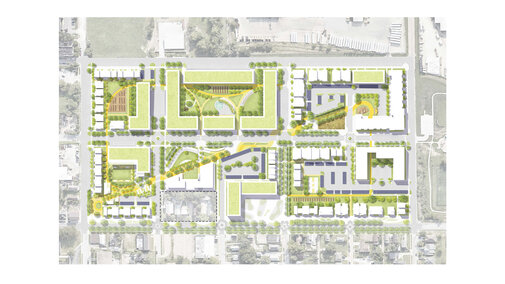
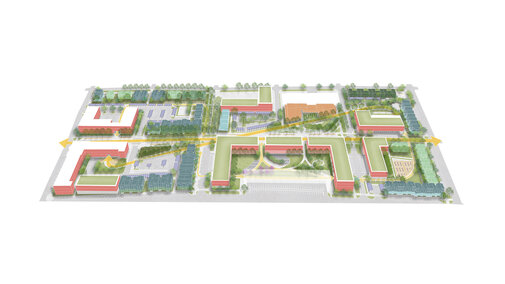
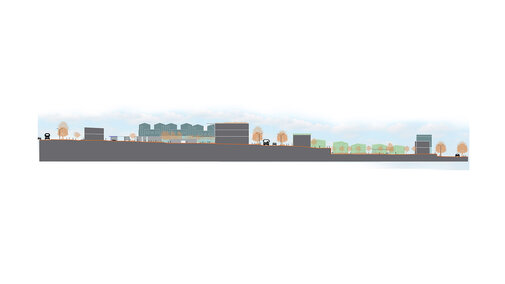
This redesign aims to take a holistic approach to the revitalization of the Southside Terrace community. By framing the revitalization effort through the lens of heat and smell mitigation, the issues are managed at both the macro and micro levels. Approaching the design from architectural, planning, and landscape perspectives simultaneously allowed problems to be addressed at a variety of scales. With mitigation strategies and tactics in tandem with sustainable design practices at the forefront of both conceptual master planning as well as site-level design intervention, a multi-scale, comprehensive design was achieved.