
-
 PHYTO 1
 -
 PHYTO 2
 -
 PHYTO 3
 -
 PHYTO 4
 -
 PHYTO 5
 -
 PHYTO 6
 -
 PHYTO 7
 -
 PHYTO 8
 -
 PHYTO 9
 -
 PHYTO 10
 -
 PHYTO 11
 -
 PHYTO 12
 -
 PHYTO 13
 -
 PHYTO 14
 -
 PHYTO 15
 -
 PHYTO 16
 -
 PHYTO 17

Team:
Jessica Shafer, Meagan Willoughby, & Seb Toalson
DSGN410 Collaborate / FALL 2020
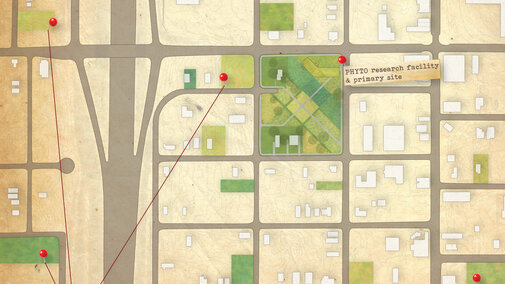
Phyto provides a minimally invasive long-term solution to the city of Omaha, Nebraska’s lead pollution problem. Omaha is home to the largest residential EPA Superfund site in the country, due to the pollution created by multiple lead smelting and manufacturing plants that left behind over 100 years worth of lead contamination across Omaha, which disproportionately and severely affect the health and wellbeing of vulnerable populations today.
Phytoremediation, from which the name Phyto is obtained, refers to the use of plants to remove pollutants in soil or groundwater. This site would be the headquarters for a network of phytoremediative test plots. It is an opportunity for research on these processes to be done on a large scale, while simultaneously remedying the destructive effects on Omaha lead continues to cause. The expanse of contaminated land in Omaha would enable this to extend outwards as needed, and has the potential to develop in other regions.
The architecture on our site is research focused with an emphasis on public interface, including lab spaces and research areas, a gallery space to display discoveries, along with an auditorium space to present work to the local residents. The landscape functions as both research into different methods of phytoremediation and an educational tool for the public.
Redlining confined vulnerable populations to our site due to its proximity to the lead smelting plants. The disrepair and neglect carried out by the City of Omaha has had lasting and severe effects which can still be seen today in the many unremediated plots of land and the affected health and wellbeing of residents.